A foreign native world...
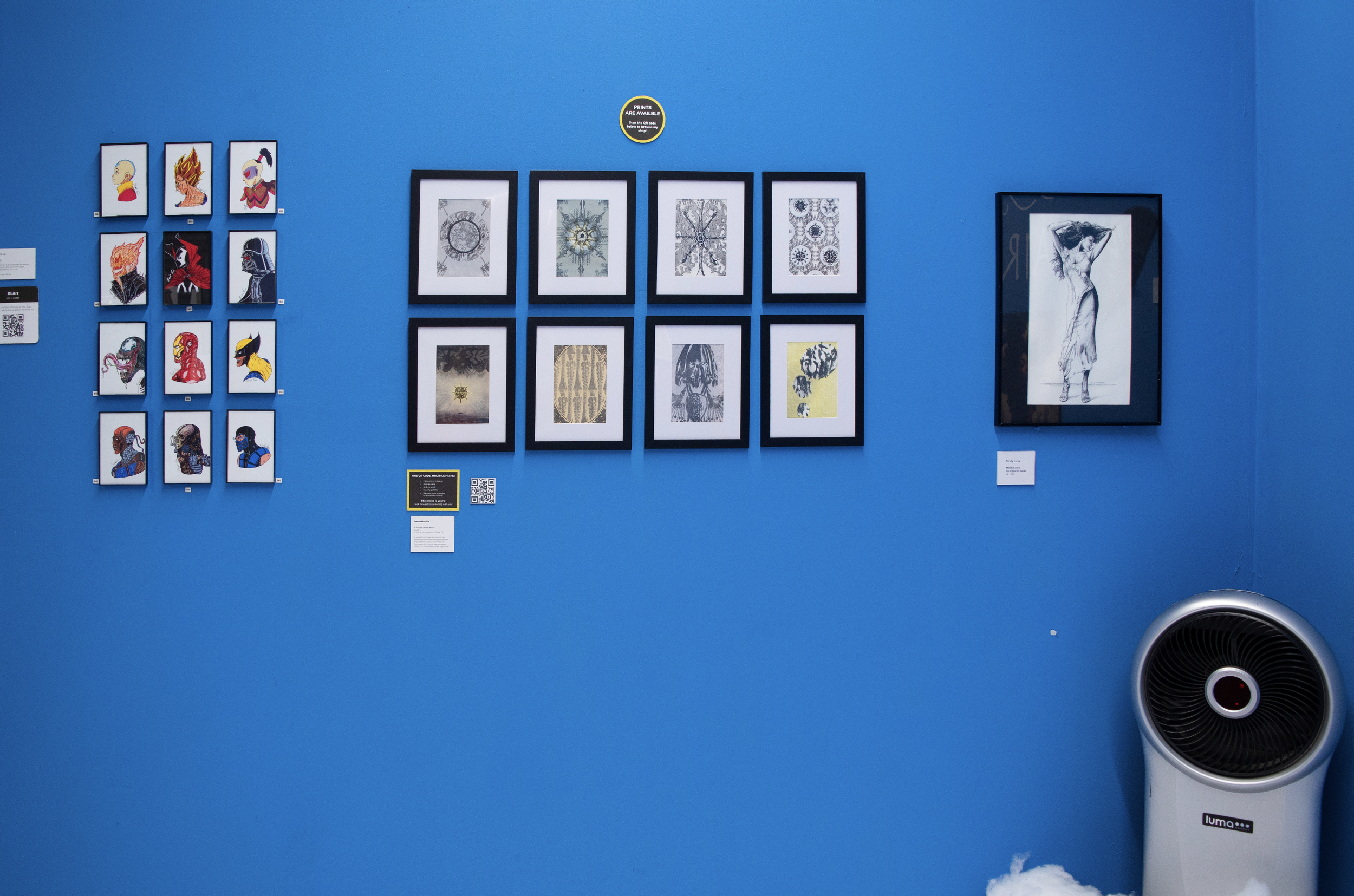
Acrylic, ink, and Gelli plate monoprint with digital transfer · Zenergies II, 2023
There is an entire living world underneath the threshold of what our senses report. This series is an attempt to look at it directly.
The process was deliberately scientific: research, digital manipulation, then a calculated monoprint delivery system — a sequence of decisions made around variables I could only partly control, arriving at outcomes that in some sense made themselves along the way. I work in repetition and contrast to build pattern, rhythm, and texture, all of it rooted in the structural logic nature already uses. Fibonacci. Growth sequences. The code underneath the form.
I believe technique and process are foundational to the narrative driving any piece — that the how is inseparable from the why. This collection carries a timeless, almost dystopian quality, and I want the viewer to sit with why that is. That is the whole mission: to open a door in someone's mind and leave it open.
Shown in the Winter room of Zenergies II: Applying the Elements, a sensory exhibition organizing forty-five multimedia artists across five elemental environments — Earth, Water, Fire, Air, and Ether.
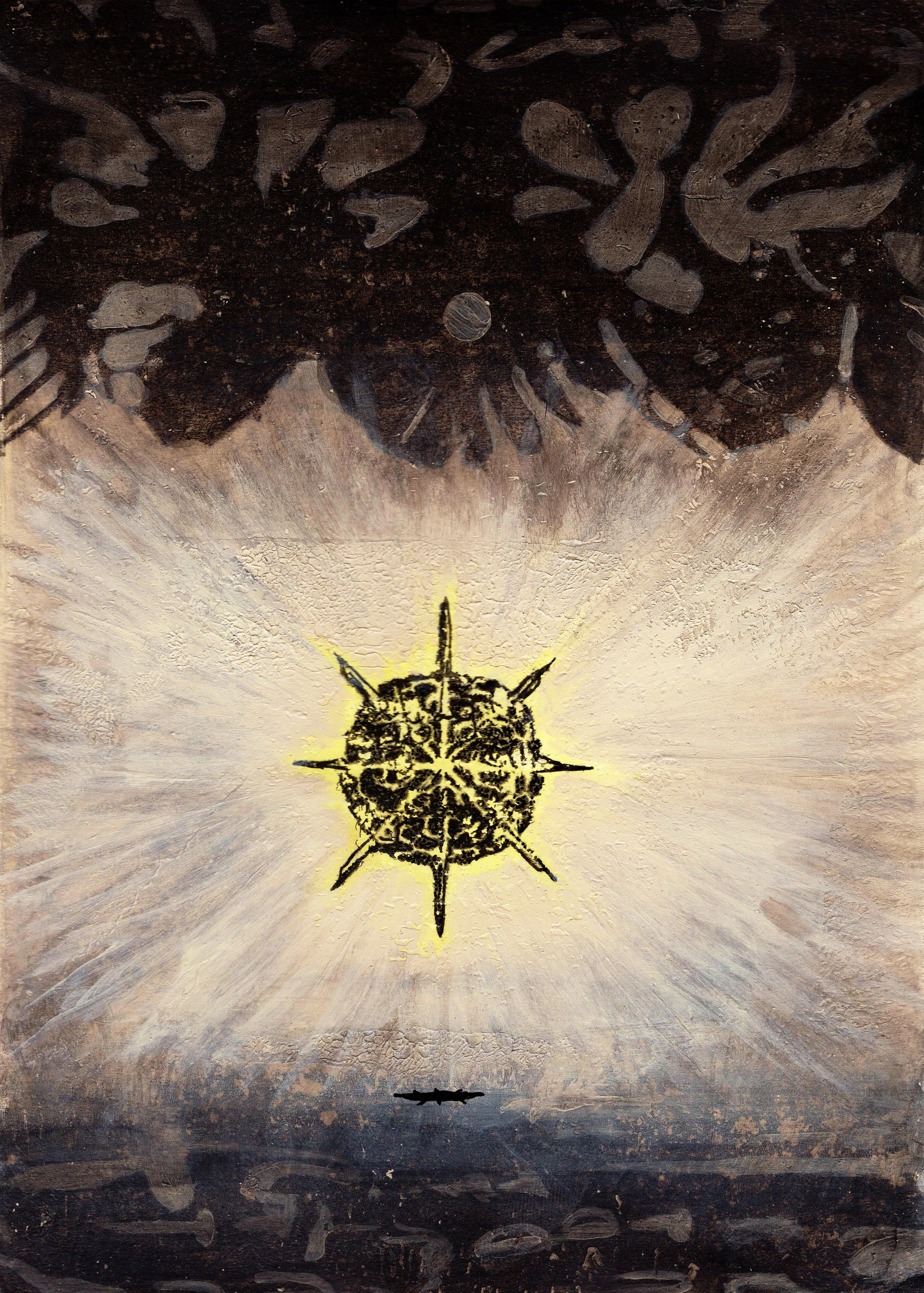
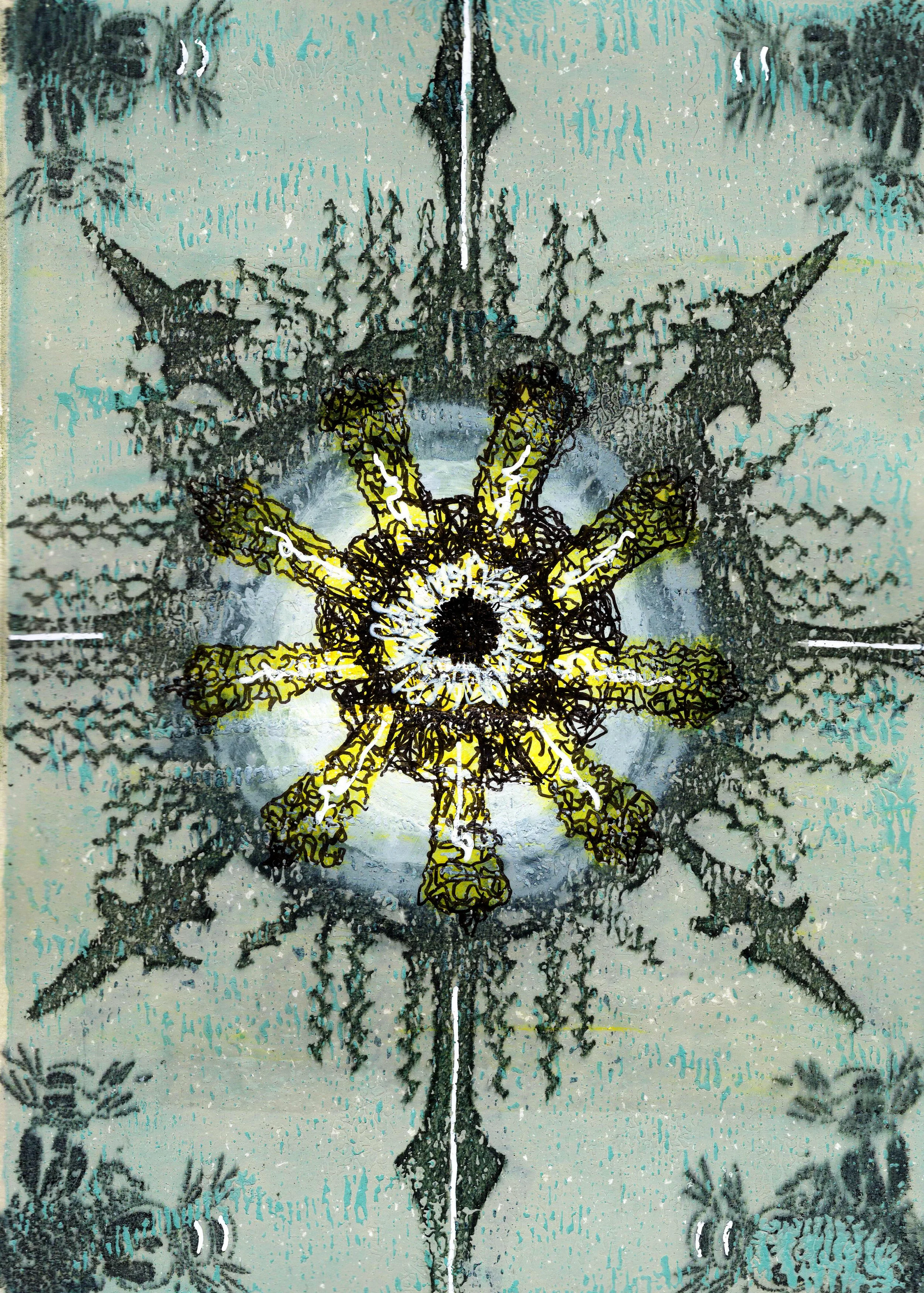
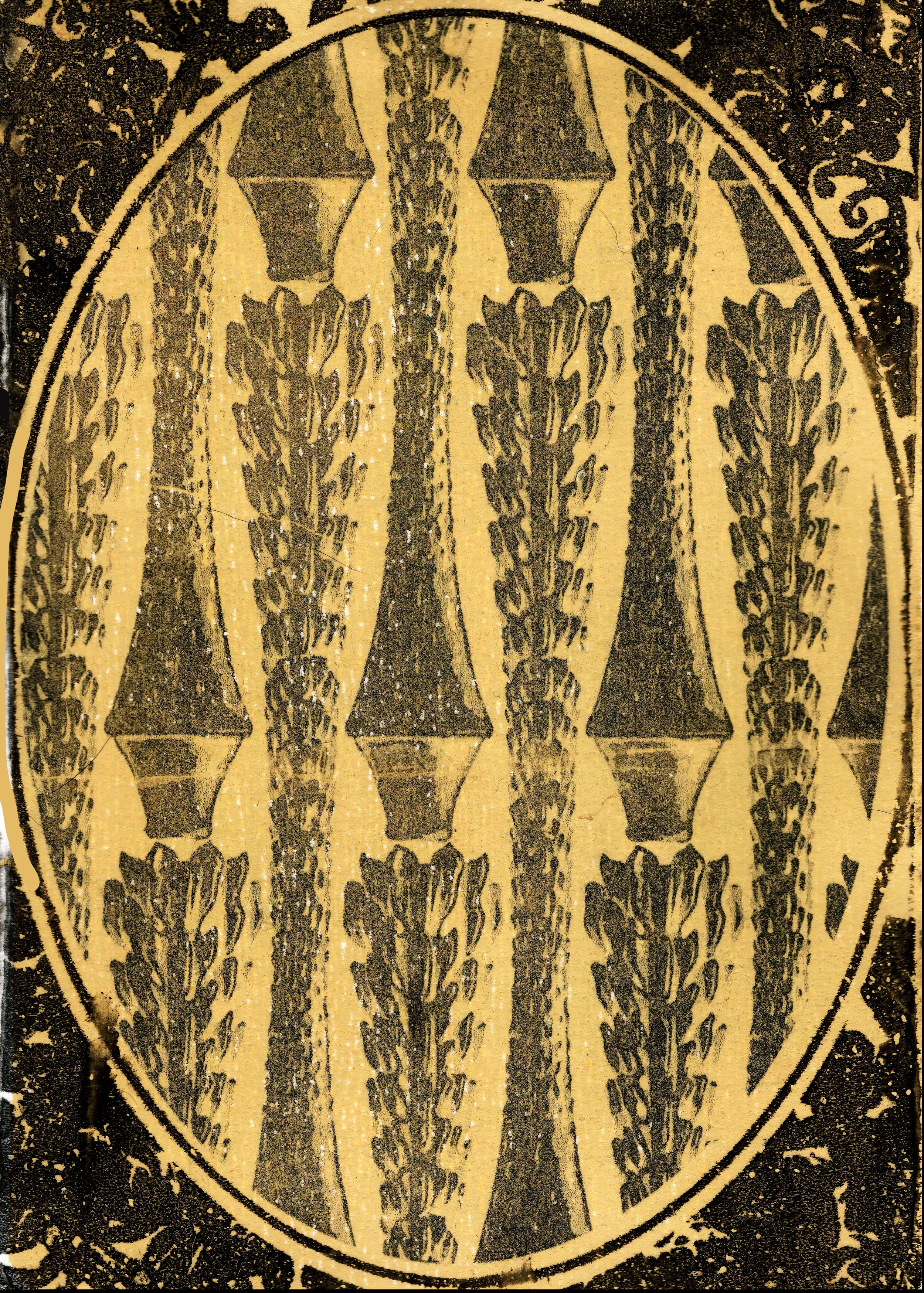
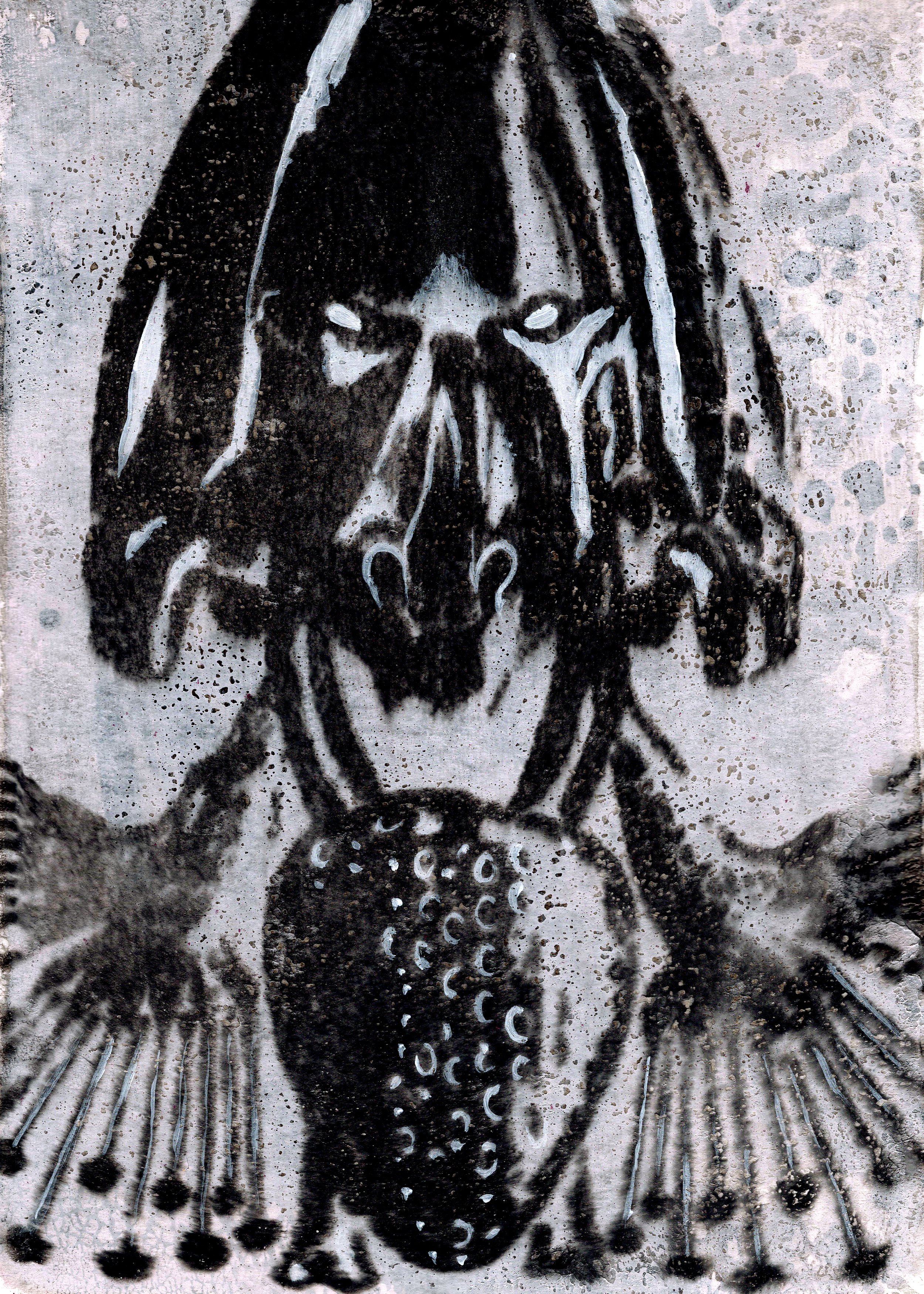
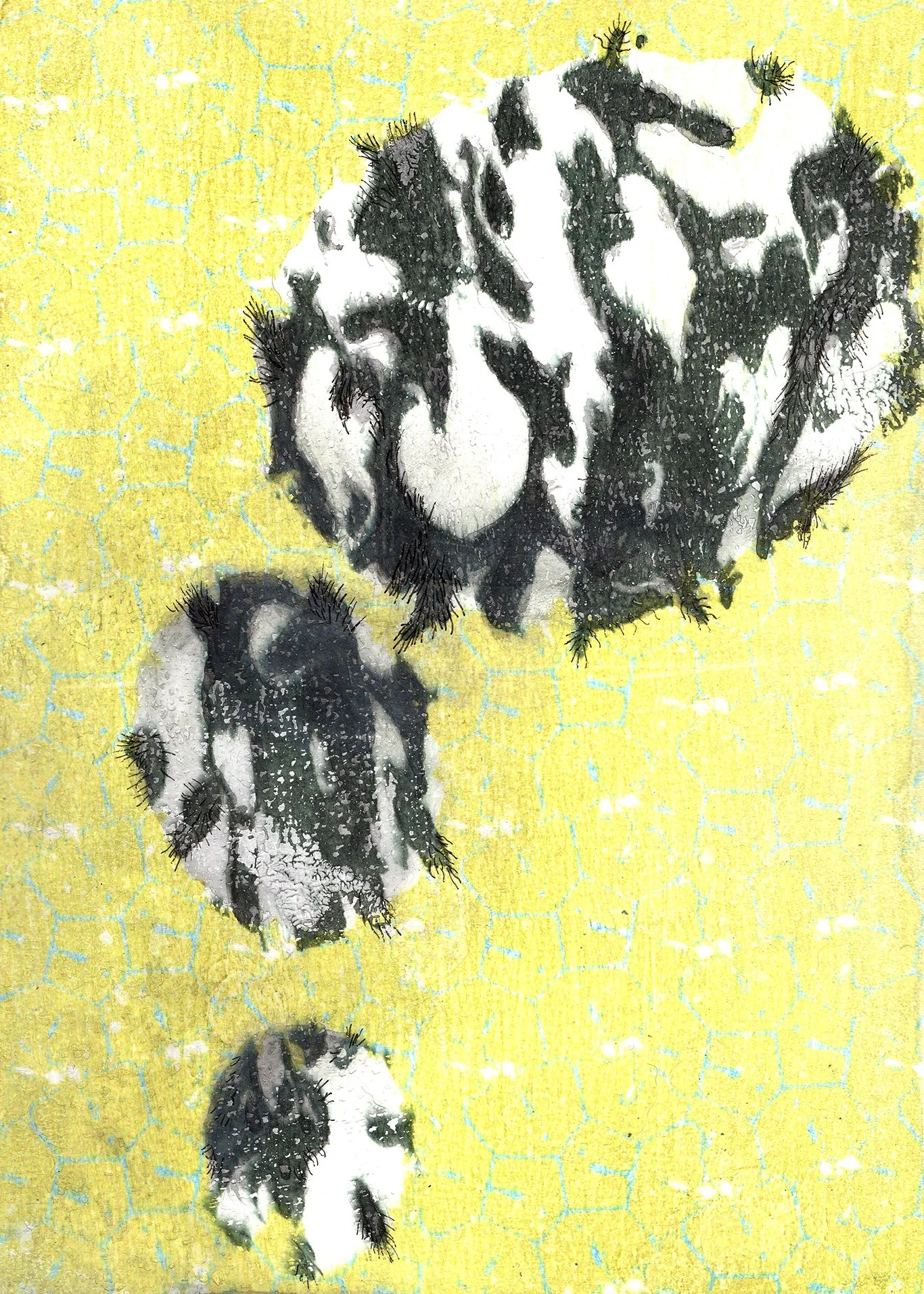
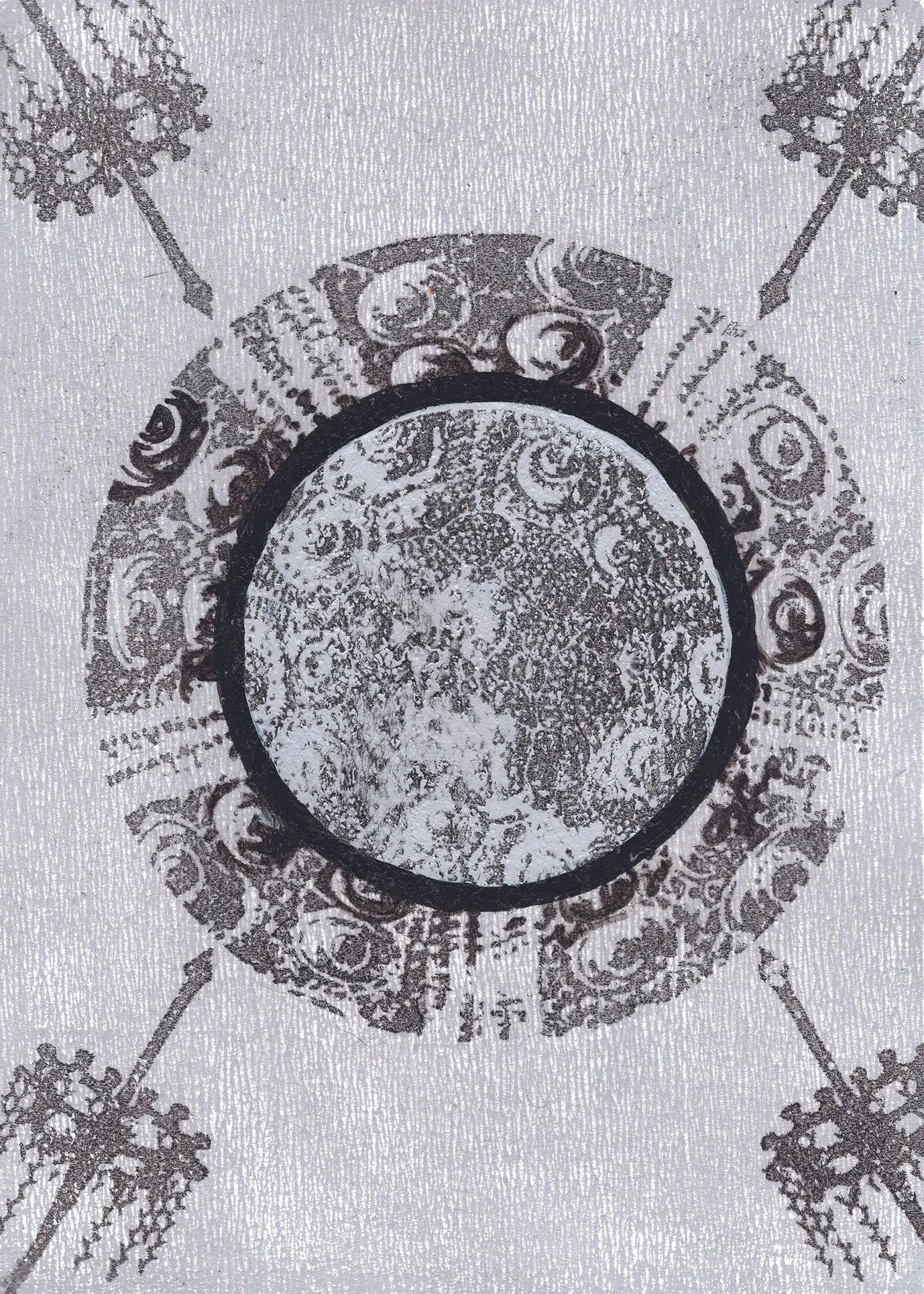
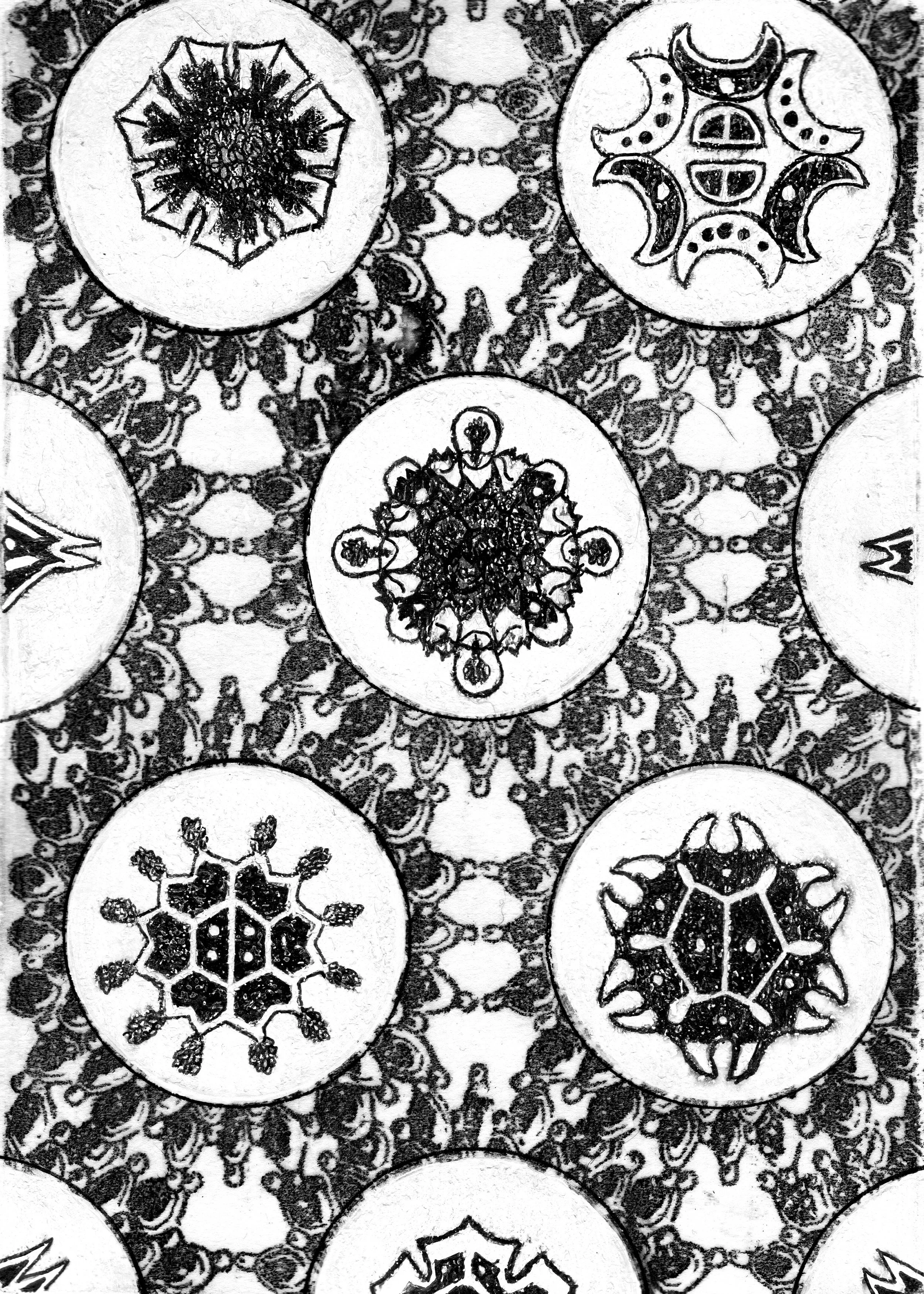
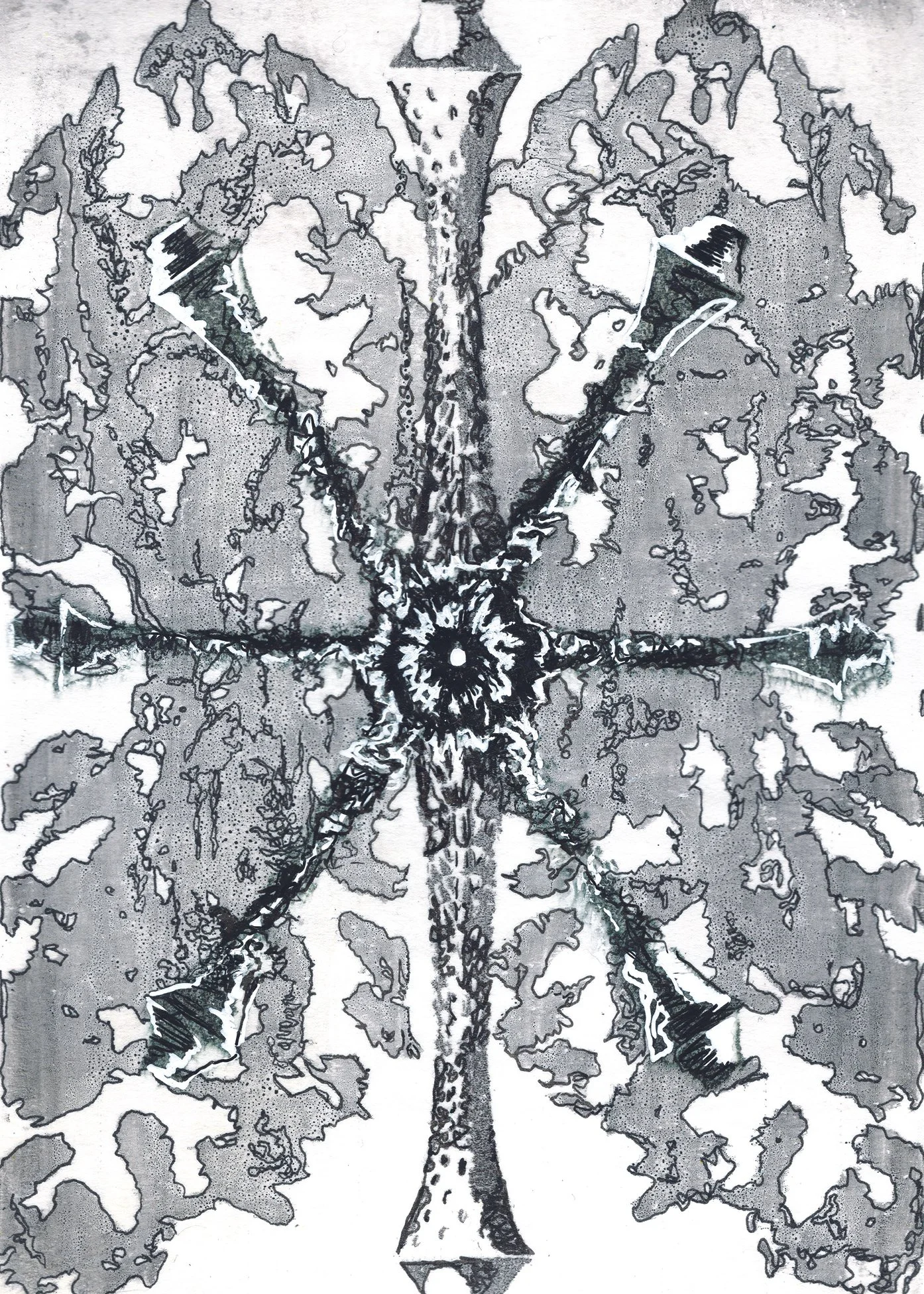
Process in Action
DETAILS
Materials — Acrylic paint, ink, Gelli plate monoprint, digital transfer
Exhibition — Zenergies II: Applying the Elements, 2023
Prints — Available (link to shop)
The Science Behind the Art
Haeckel's Kunstformen der Natur ("Art Forms of Nature") collects over 100 detailed, multi-color illustrations of animals and sea creatures, and would go on to influence the Art Nouveau movement.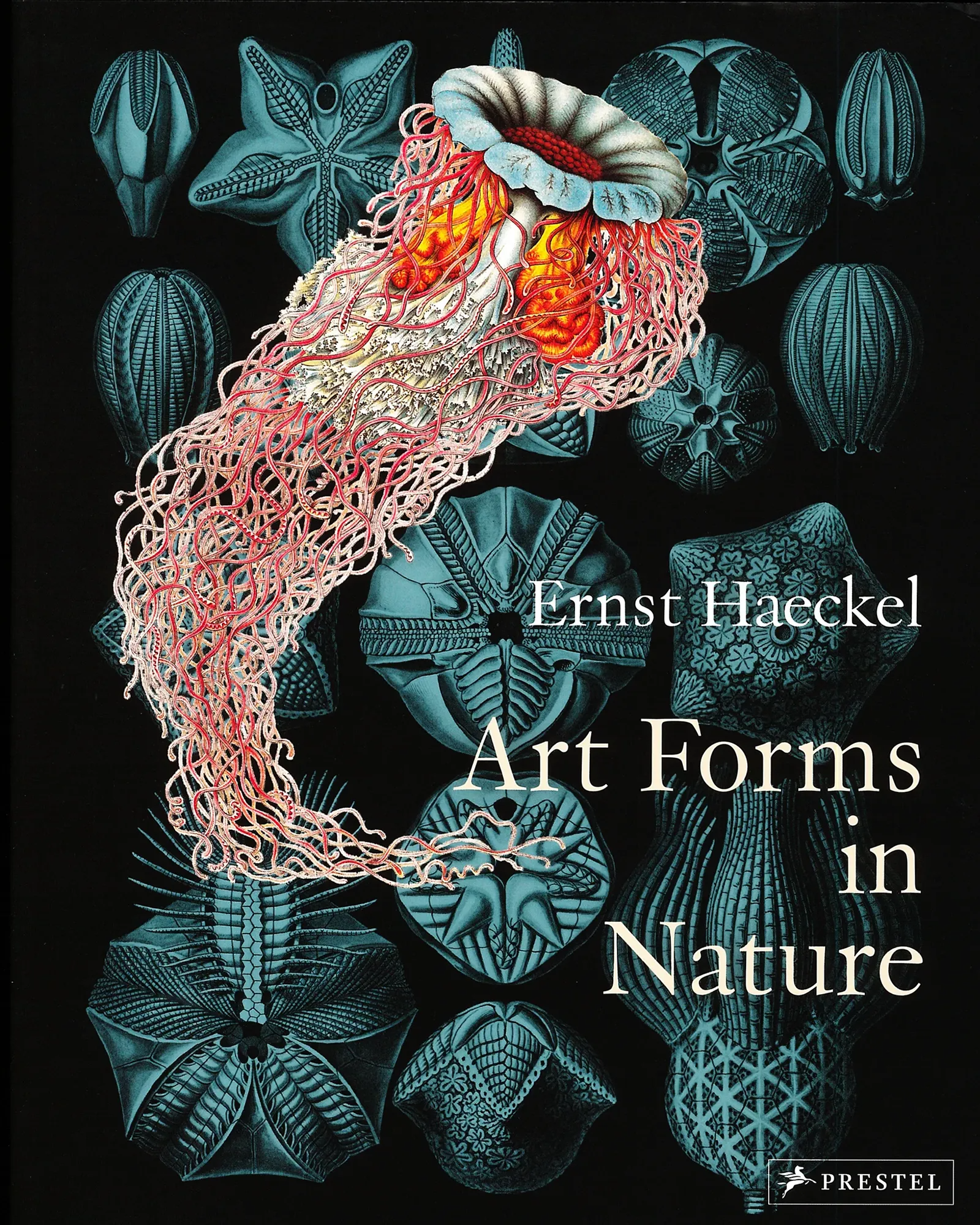
Ernst Haeckel...
Born Feb. 16, 1834, Potsdam, Germany
Died Aug. 9, 1919, Jena, Germany.
A German zoologist and evolutionist who was a strong successor of Darwinism and who introduced new notions of the evolutionary descent of human beings for his time, which were not originally received well by his peers. He was the first to confirm single celled organisms to be real, which changed the course of
Attempting to explain both inorganic and organic nature under the same physical laws, Haeckel portrayed the lowest creatures as mere protoplasm without nuclei; he speculated that they had arisen spontaneously through combinations of carbon, oxygen, nitrogen, hydrogen, and sulfur. In those days of great interest in protoplasm, it was believed for a while that certain deep-sea dredgings had brought up such structureless organisms; when scientists found this to be in error, Haeckel continued to insist, throughout the years, that “monera” existed. From them he traced one-celled forms with nuclei and three kingdoms—animal, vegetable, and the neutral, borderline “protista.” His artistic leanings toward ideal symmetries led him to outline numerous genealogical trees, sometimes to supply missing links or branches; and he reconstructed the human ancestral tree to demonstrate humankind’s descent from the lower animals.
Behind the Scenes
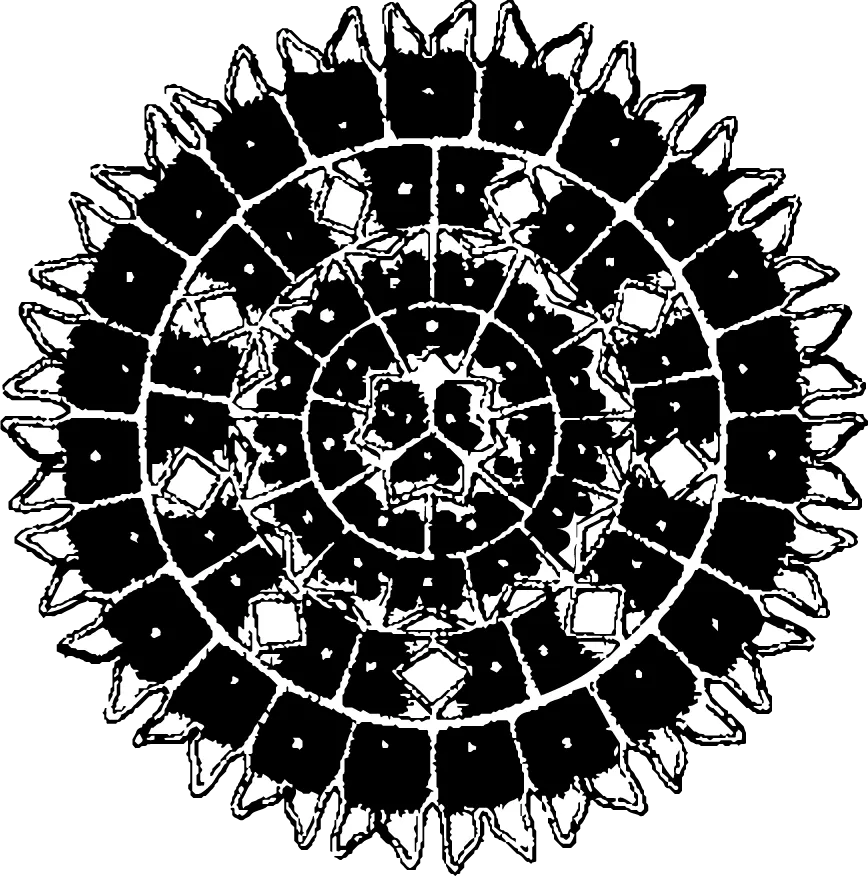
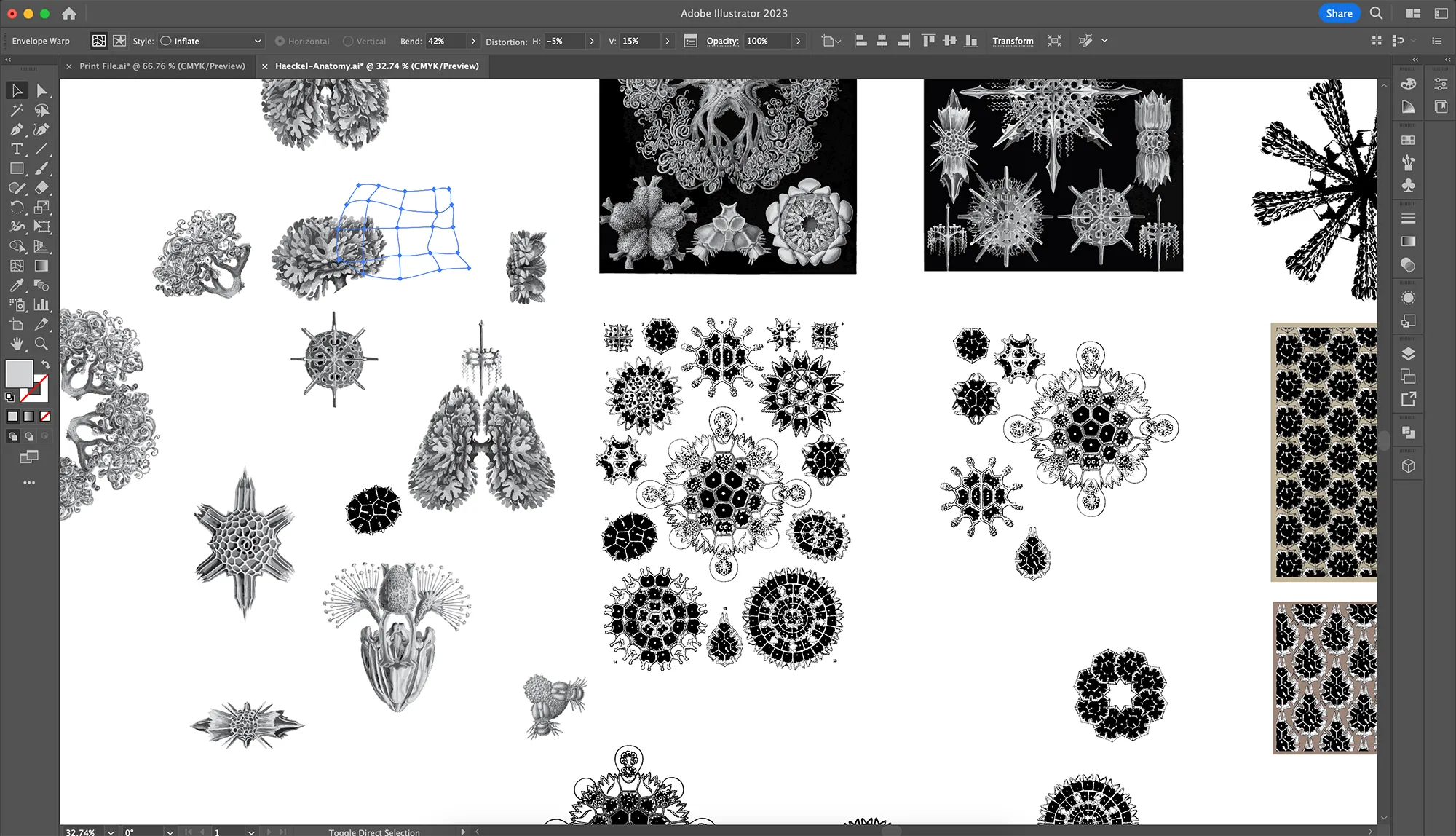
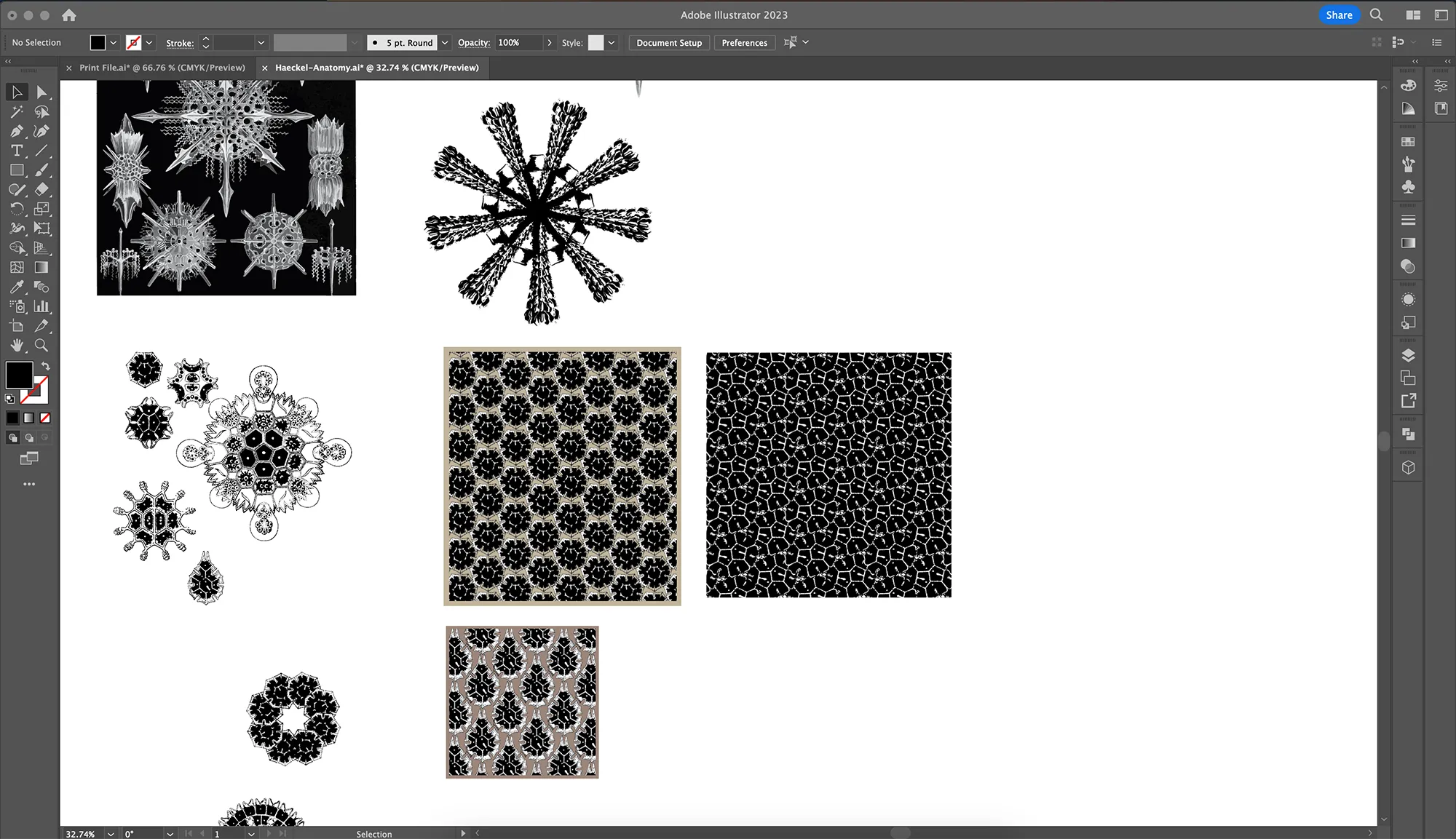
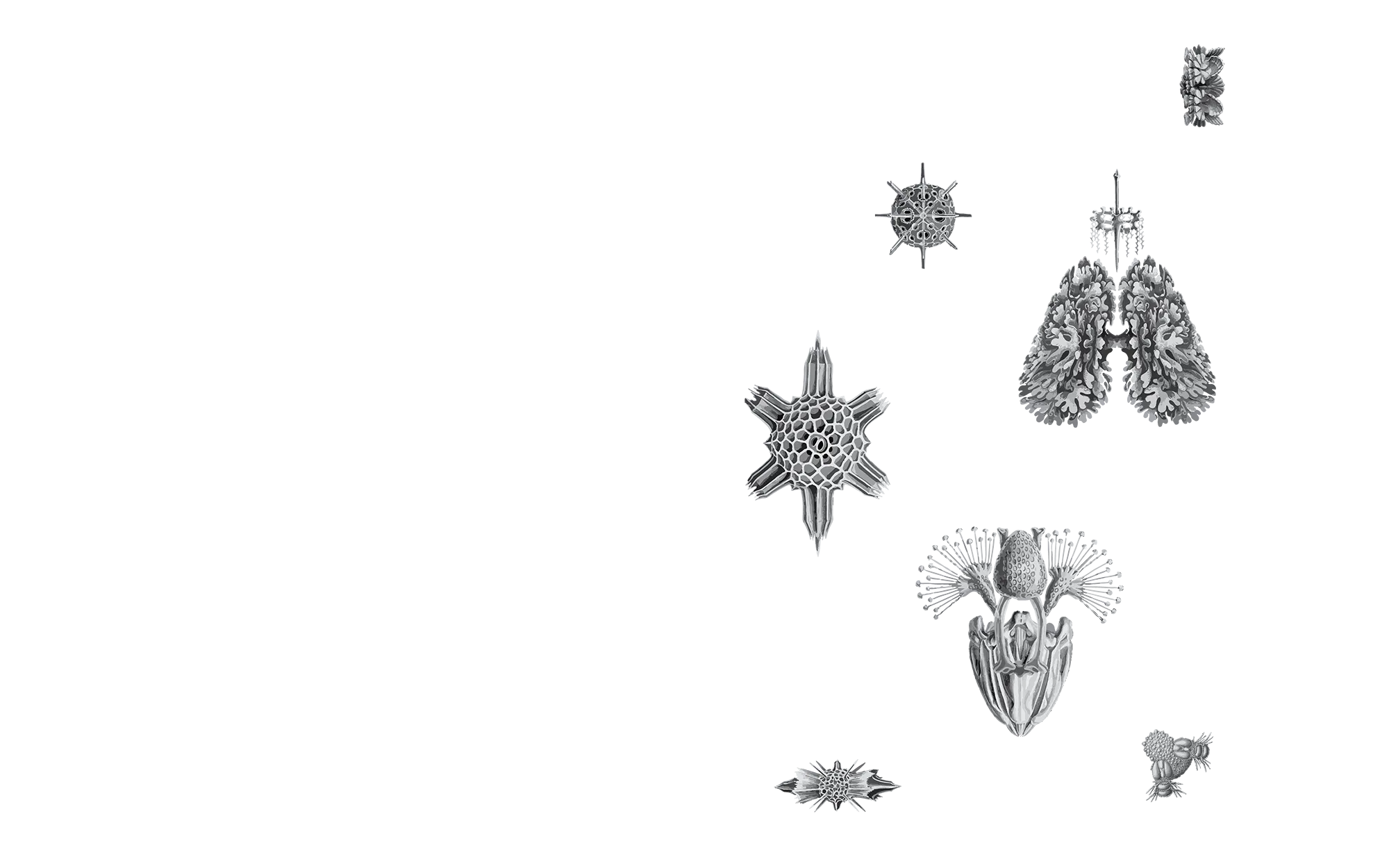
First, I scanned the pages in for high-quality resolution. Then using Illustrator, I vectorized the plates and isolated organisms to manipulate their presentation further.
Then, I played with principles like rhythm, pattern, and repetition to see what kind of textures and new forms could be brought to life. This process mimics Haeckles' research of symmetries within evolutionary life.
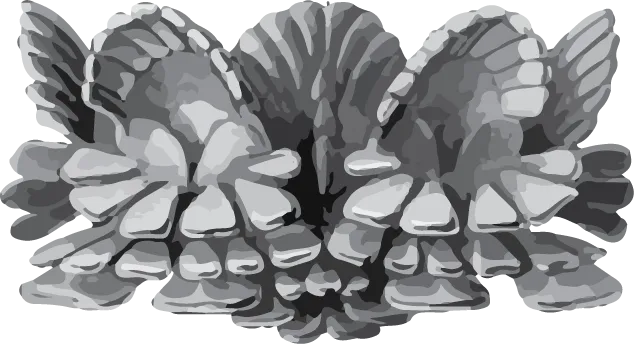
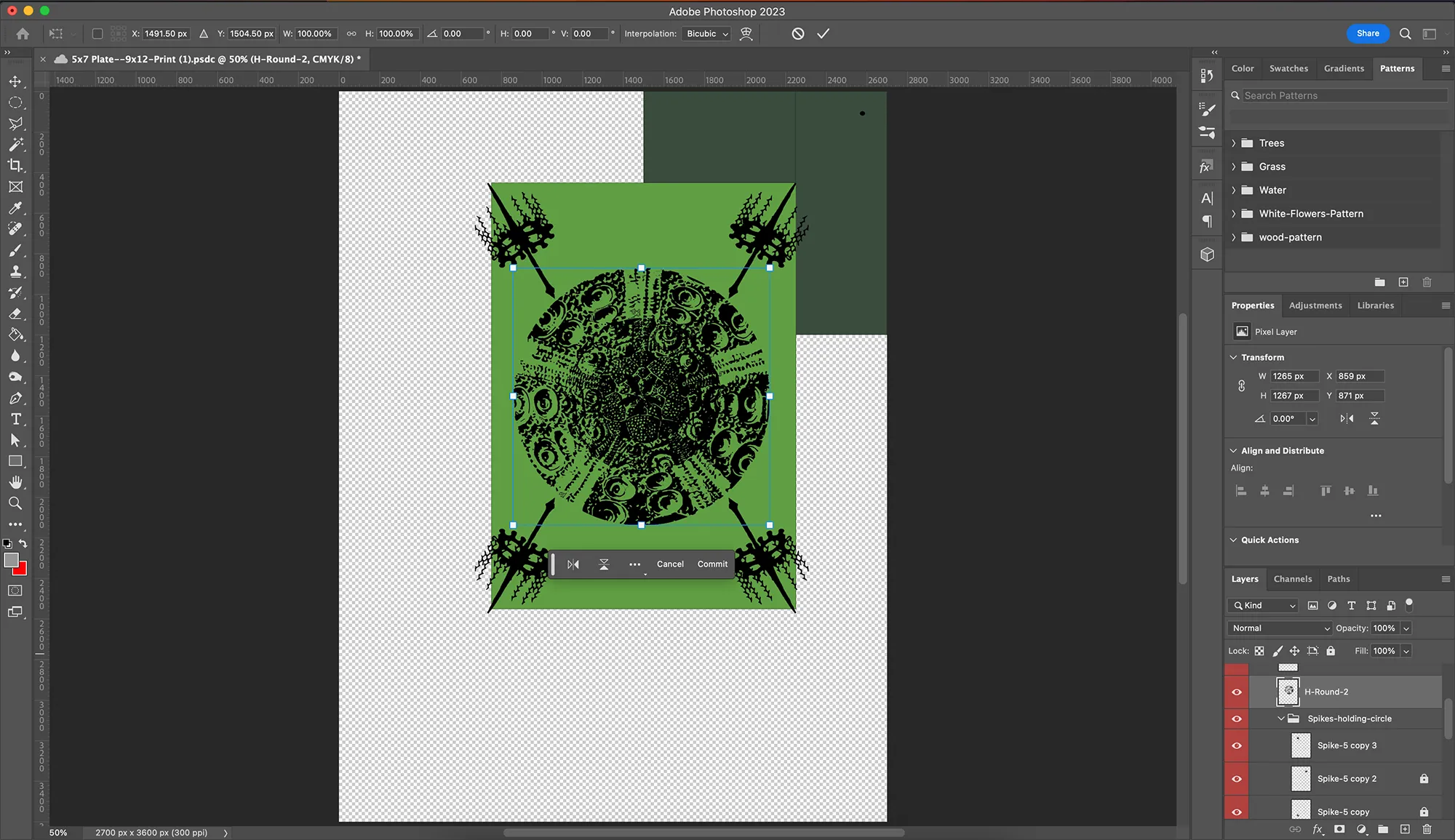
Finally, using Photoshop, I devised a registration system to help streamline the image transfer to the gel printing plate. I love how the gel plate printing method, by nature, is unpredictable due to the numerous variables involved. Is this not analogous to evolution?